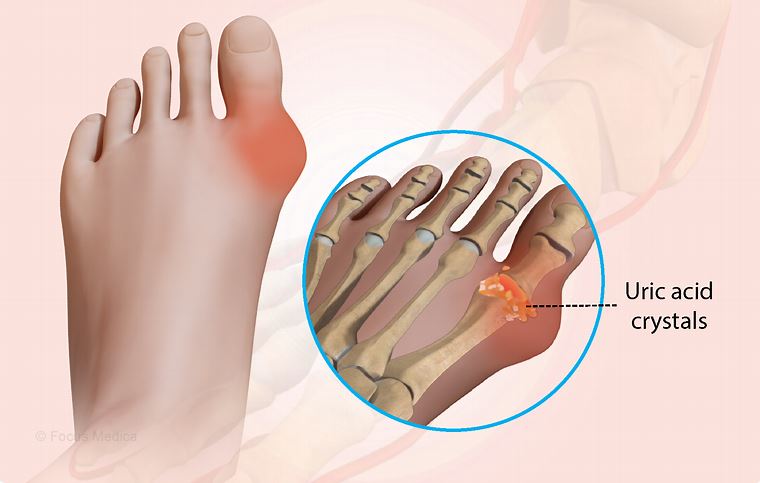
What is Gout ?
Gout is a type of inflammatory arthritis characterized by joint inflammation due to an excess accumulation of uric acid. Typically affecting the big toe, gout results from the buildup of uric acid crystals within the joints. Symptoms of gout include sudden severe pain and swelling, primarily in the big toe joint, with attacks often occurring at night and interrupting sleep. Other symptoms encompass tender, warm, red, and swollen joints, and in severe cases, joint destruction can occur.
The condition develops in several stages, starting with asymptomatic hyperuricemia, where uric acid levels rise without noticeable symptoms. Acute gout involves sudden spikes in uric acid levels, causing severe pain that usually subsides in a few days. Interval gout signifies the time between attacks, characterized by low-level inflammation causing joint damage. Chronic gout occurs when elevated uric acid levels persist for years, leading to frequent and damaging attacks.
Risk factors for gout include excess consumption of meat and seafood, obesity, certain medical conditions like heart and kidney diseases, family history, age (common in individuals above 50), and certain medications. Diagnosis involves physical examination, medical history review, and various tests like blood tests to measure uric acid levels, CRP and ESR tests to assess inflammation, X-rays, ultrasounds, and synovial fluid analysis to detect uric acid crystals.
Treatment includes medication and lifestyle changes. Complications of untreated gout may include the formation of uric acid deposits known as tophi under the skin, often in fingers, hands, feet, or other joints. These can become swollen and painful during gout attacks. Repeated gout attacks can cause joint damage, and uric acid crystals deposited in kidney tubules can lead to kidney stones.
Prevention strategies involve lifestyle modifications like staying hydrated, avoiding sweetened drinks and excessive alcohol consumption, consuming low-fat dairy products, limiting intake of meat, fish, and poultry, maintaining a healthy weight, and adhering to prescribed medications. Patients should consult their doctors about lifestyle changes, potential need for long-term medication, and possible complications associated with gout.